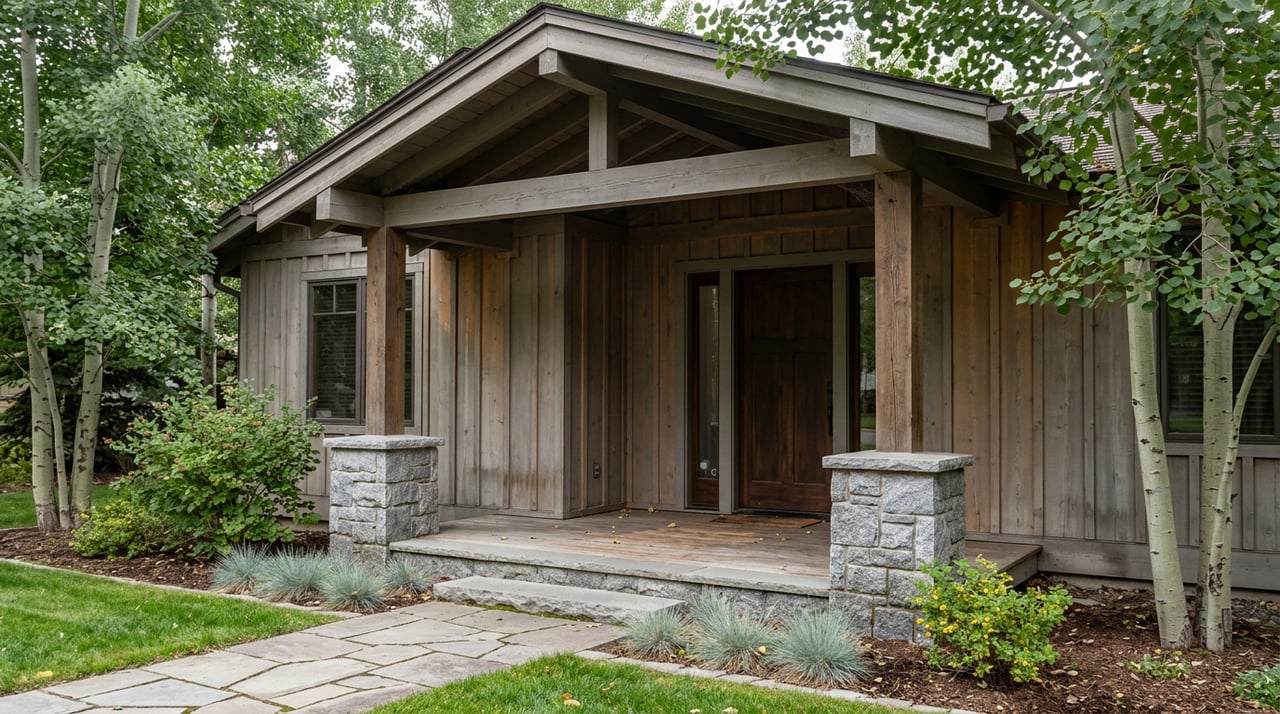
How West End Locals Are Spending the Last Weeks of a Two-Season August
August 13, 2026
August 13, 2026
Something unusual is happening in the West End this month, and most of the neighborhood is only half aware of it. The free naturalist programs that have quietly defined a West End evening for decades, walks and talks run out of Hallam Lake, are counting down toward their close for the year. At the same time, the newest thing to happen to Main Street in years, a hotel restaurant that didn't exist two months ago, is just settling into its very first full summer. For a few weeks, both are running at once, three or four blocks apart, and residents who don't deliberately connect the two are going to miss the overlap entirely.
That's the thing worth knowing if you live here: this particular version of a West End August, old rhythm and new arrival running side by side, isn't going to repeat itself next year the same way. By next June, Lola 41 will be an established fixture rather than a fresh opening, and the beaver walks will already be back on their own clock. Right now, for a short window, you can do both in one evening.
The Aspen Center for Environmental Studies has run programming out of Hallam Lake, a 25-acre nature preserve at the end of Puppy Smith Street, since Elizabeth Paepcke donated the land to the organization in 1968. Most of what happens there in summer is free or nearly free, and almost none of it gets promoted the way a restaurant opening does. It just happens, on a schedule, whether or not anyone from outside the neighborhood notices.
Three programs define a West End evening in August, and all three end within weeks of each other:
Here's what that means if you're deciding how to spend the next few weeks:
| Program | When | Last 2026 date | Sessions left as of today |
|---|---|---|---|
| Know Your Trees | Mondays, 4 p.m. | August 24 | 3 Mondays, including today |
| Sunset Beaver Walks | Tues/Wed, 7:30 p.m. | August 26 | 6 evenings |
| Birds of Prey Show | Mon–Sat, 2 p.m. | September 7 | runs into early September |
The beaver walks and tree walks both require advance registration through ACES's own site, and they fill. If you've been meaning to go, the math above is the actual math, not a rough guess.
None of this happens by accident. The West End has been protected as a historic district for long enough that its rhythm and its architecture reinforce each other. The Aspen Historical Society still runs its Victorian West End walking tour out of the Wheeler/Stallard Museum on Bleeker Street, Thursdays and Saturdays at 10:30 in the morning, tracing streets the Historical Society describes as a quiet stretch of tree-lined boulevards bordered by the Aspen Meadows, the Aspen Institute, and the museum's own grounds. The guides work in details most residents have never heard even if they've lived on the block for years, from Ute activity along the river to the neighborhood's long-gone racetrack and rodeo grounds.
That kind of pace, slow, walkable, oriented around a handful of institutions that haven't moved in a century, is what makes the West End feel different from the rest of downtown even though it sits a few minutes from the gondola. The Aspen Institute's Meadows campus anchors one end of the neighborhood, home to the Resnick Center for Herbert Bayer Studies and the Paepcke Art Gallery, both open to the public and both easy to fold into a walk that also passes Ruth Whyte Park.
Then there's Main Street. White Elephant Aspen, a 54-room hotel on the corner of Main and Garmisch, opened its doors on February 3 and is only now getting its first real summer, the season when a hotel's gardens, pool deck, and restaurant patio actually get used the way they were designed to be used. Inside it, Lola 41 opened on June 15, the fifth location for a restaurant group that started on Nantucket and has never operated west of the East Coast until now.
The restaurant seats around 42 in its main dining room and bar, another 60 on a climate-controlled outdoor patio, and 12 more in a lower-level private room built into the building. According to Aspen Times reporting on the opening, general manager Kelly O'Neill said the response since opening had "taken off even more than we expected," with the dining room filling every night. The kitchen has leaned into the location rather than importing the East Coast menu wholesale, working trout and elk into a globally inspired format and sourcing what it can from nearby producers.
For a neighborhood used to measuring change in decades, a restaurant that's been open for less than two months and already runs at capacity is a genuinely new variable. It's also, for the moment, walkable from the same streets where the historical society's tour groups pass by every Thursday and Saturday morning.
There's a detail here that a lot of residents already use without thinking much about it. Aspen Meadows Resort has run a WE-cycle station outside its Walter Isaacson Center for years specifically because the route from the Meadows campus into the historic West End and on toward downtown is short enough to bike and pleasant enough that people actually do. Aspen Meadows describes the arrangement as free, unlimited 30-minute rides available from May through November 1, with stations at the Isaacson Center, the Benedict Music Tent, and the Aspen Institute itself.
That means the same trip a Historical Society tour group makes on foot, from the Wheeler/Stallard Museum on Bleeker down toward the river and Main Street, is also a short ride on a free bike system built for exactly this kind of neighborhood-to-downtown movement. It's the kind of infrastructure that makes a two-clock August, historic mornings and new-restaurant evenings, genuinely easy to combine rather than just theoretically possible.
None of this is permanent, and that's the actual point. The naturalist walks that have shaped a West End evening for most of a lifetime are on a countdown that ends in early September at the latest, and for two of the three programs, the countdown ends this month. Lola 41, on the other hand, is going to look completely different a year from now, once it's past its debut season and settled into whatever its second Aspen summer turns out to be. Right now, in the space of a few weeks, a resident can walk a Victorian streetscape that hasn't changed in a century, catch a beaver at sunset on a walk that wraps up in 16 days, and sit down for dinner at a restaurant that's been open for eight weeks. That specific combination isn't going to hold in exactly this shape again.
If you've been putting off the beaver walk because it felt like something for visitors, the sessions left this year are the ones in the table above, not an open-ended offer. And if you haven't made it to Main Street yet, the first-summer version of that restaurant is the one happening right now.
The Shea Team spends as much time tracking what's new in Aspen's neighborhoods as we do tracking what's for sale in them. If you're curious what else is shifting in the West End this year, or anywhere else in the Roaring Fork Valley, connect with The Shea Team.
Stay up to date on the latest real estate trends.
We are committed to guiding you every step of the way—whether you're buying a home, selling a property, or securing a mortgage. Whatever your needs, we've got you covered.

415 EAST HYMAN AVE ASPEN, CO 81611