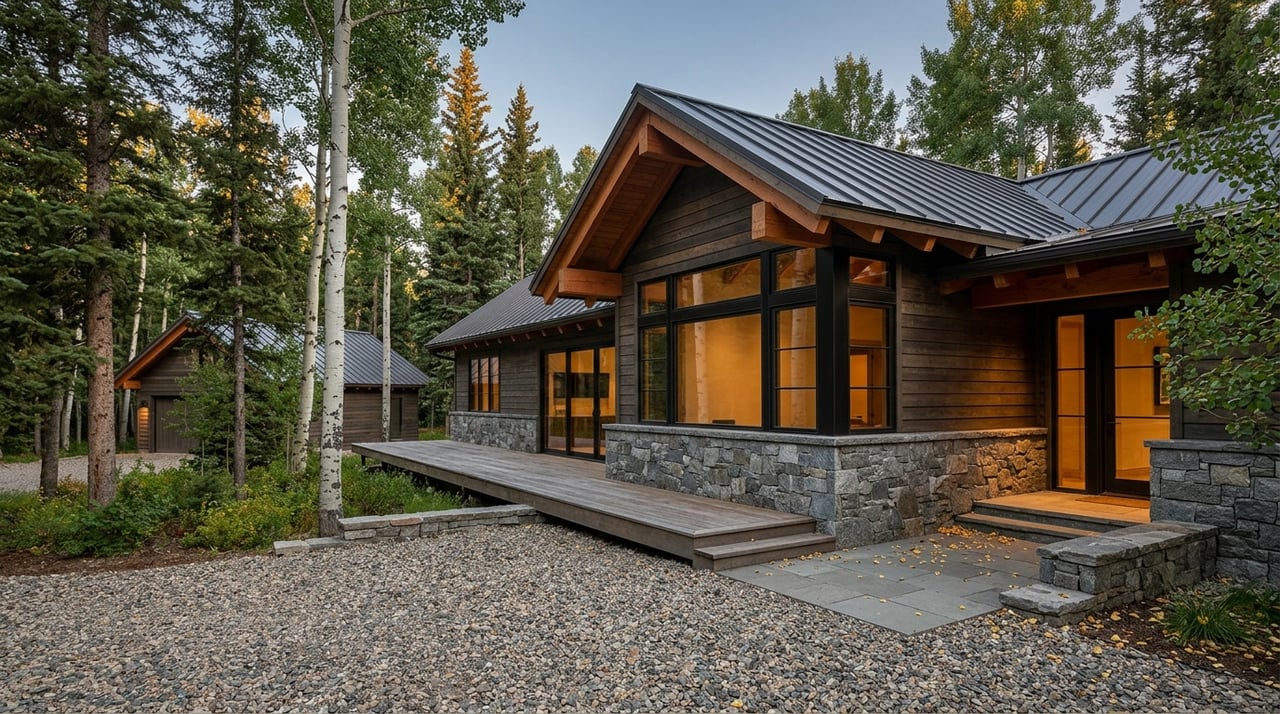
Old Snowmass Family Compound Planning Essentials
June 25, 2026
June 25, 2026
If you are dreaming about a legacy compound in Old Snowmass, the vision is usually bigger than one house. You may be thinking about privacy, room for family across generations, space for horses or hobbies, and a property that feels lasting from day one. In Pitkin County, that kind of planning takes more than finding beautiful land. It takes a clear understanding of what the parcel can legally support, how the land wants to be used, and what approvals may shape the final result. Let’s dive in.
Old Snowmass offers the kind of scale and quiet that draw buyers looking for a long-term mountain retreat. But this part of Pitkin County is governed by a rural-first planning framework that is meant to preserve rural character, contain growth, and manage development through zoning, subdivision controls, GMQS, and TDR tools.
That means the first question is not just how large or beautiful a future home could be. The first question is whether the parcel already has the right to build a primary structure, or whether that right still needs to be obtained through a TDR purchase or a GMQS allocation.
Pitkin County also directs property owners and applicants to confirm the zone district, determine whether the property is inside or outside a UGB, and verify whether an existing development right is already in place. For anyone planning a family compound, this early diligence can shape everything that follows.
It is easy to fall in love with a parcel based on views, privacy, or acreage. In Old Snowmass, those qualities matter, but they do not replace the need to confirm what can actually be built.
Most proposed development in Pitkin County must go through an Activity Envelope process and Site Plan Review. In simple terms, the county looks not only at whether development is allowed, but where it can be placed to reduce environmental and visual impacts and avoid constrained areas.
Before you move too far into conceptual plans, it helps to answer a few practical questions:
For a legacy property, these are foundational questions. They help you separate a compelling idea from a realistic path.
In Old Snowmass, the best building site is not always the highest point or the most dramatic ridge line. Pitkin County’s Activity Envelope submission requires a detailed look at parcel boundaries, driveway alignment, contour lines, slope analysis, floodplain data, streams and wetlands, wildfire and geologic hazards, wildlife habitat, historically irrigated areas, and historic resources.
The county’s approach is avoidance first where possible, then mitigation where needed. That matters because a view-driven siting plan can overlap with sensitive terrain, wetlands, riparian areas, or habitat concerns.
County guidance also notes that wetlands and riparian areas are important for wildlife and water quality. Stream setbacks may be larger when needed to protect streamside vegetation, wetlands, or riparian habitat. So when you evaluate a property, usable building area can be very different from gross acreage.
For a compound, privacy often depends on circulation as much as building placement. Driveway location, guest arrival, emergency response, and service access all matter.
Pitkin County requires address signage for all addressable structures, and driveway entrances should display the address when the building is more than 50 feet from the road. New structures or a new roadway can also require a new address assignment or update. That makes access planning part of the design process, not an afterthought.
A pond or spring can sound like a natural fit for a mountain estate. In practice, these features often bring added review.
Pitkin County says springs and seeps are usually subject to Colorado water rights. Ponds require county and engineer oversight, plus proof of the water rights needed to divert, store, and use the water. Earthmoving permits may also be required for pond work.
One of the biggest misconceptions in rural luxury real estate is that acreage automatically allows a free-form compound plan. In Pitkin County, each building or use has to fit a defined legal category.
That does not limit creativity, but it does mean the programming needs to be thoughtful from the start. A well-planned compound may support several complementary structures, yet those uses are not interchangeable under county review.
For multigenerational living or on-site support, buyers often ask about secondary living space. Pitkin County distinguishes between general accessory space and a true secondary residential unit.
A Caretaker Dwelling Unit is allowed only in certain residential and agricultural districts, and only as an attached accessory unit. Size is capped at 1,000 or 700 square feet depending on lot size, and that square footage counts toward the total floor area allowed on the parcel.
Detached guest quarters are not automatically treated as a simple outbuilding. Under county code, accessory structures may not include kitchen or bath facilities sufficient to make them suitable for permanent residential occupation unless specifically approved under the Land Use Code.
Pitkin County also has a category for an Accessory Structure with Bathing Facility, but it applies only on parcels of at least 35 acres. That category requires a deed restriction ensuring only one dwelling unit exists on the parcel, and those structures are treated as separate dwelling units for road-impact-fee purposes.
If your long-term vision includes horses or hobby farming, those uses can be possible in Old Snowmass, but they are regulated. Pitkin County lists horse boarding and riding stables or academies as specific regulated uses, with visitor-trip limits tied to the use and, in some cases, acreage.
County rural-living guidance also makes a useful distinction. A true agricultural barn is not the same as an indoor riding arena, event space, or gathering hall. If a building is part of your compound plan, it should be evaluated according to how it will actually function.
Many compound buyers want spaces that bring people together without creating another full residence. County code recognizes a club house or recreational building as an accessory structure used with outdoor recreation or as meeting or club space for a residential development or neighborhood.
That can provide a useful framework when thinking about a pool house, gym, studio, or family gathering barn. The key is to align each building with the right use category early in the planning process.
A legacy compound only works if the property’s systems can support the way you plan to use it. In Old Snowmass, that means looking closely at water and wastewater capacity.
Pitkin County says homes outside sewer districts use OWTS septic systems. OWTS use permits are required before sale or large remodels, new wells require state permits, and building applications must show proof of adequate water supply.
This is one reason compound planning should start with a full property review rather than just a floor plan exercise. If the wastewater or water-supply setup does not match the intended program, your options may narrow quickly.
Old Snowmass offers a remarkable setting, but it is still mountain country. Pitkin County’s rural-living guidance notes that winter access can be difficult, curbside trash service may not exist, and emergency or healthcare services can be farther away than in more urban locations.
For a buyer planning a long-hold family property, those daily realities are part of the asset. Access in snow, service logistics, wildlife pressure, agricultural adjacency, and overall ease of year-round use should all be part of your evaluation.
Wildfire planning is also now central to the process. Pitkin County says its wildfire resiliency code and state wildfire hazard mapping apply to building permit applications submitted on or after May 2, 2026. For new construction, wildfire hardening is now a core design factor from the start.
Large rural projects often involve more than one approval path. Alongside planning review and building permits, additional permits may be required depending on the site and scope.
Pitkin County notes that a project may also trigger:
The county also says building permits are required for all structures regardless of size or use. For most buyers, a pre-application conference is the normal first step to understand what the project will require.
If you are evaluating land or an older estate in Old Snowmass, a focused diligence process can save time and reduce surprises. The right questions help reveal whether a property is suited for your specific compound goals.
Here is a strong starting checklist:
Planning a legacy compound is part land strategy, part design exercise, and part regulatory diligence. In Old Snowmass, the strongest outcomes usually come from starting early, understanding the county framework, and matching your goals to the realities of the site.
That is especially true when the vision includes multiple structures, family flexibility, equestrian elements, or a long-term hold strategy. A parcel may be exceptional, but the best fit is the one that supports your goals both legally and practically.
If you are considering a land purchase, redevelopment, or estate sale in Old Snowmass, working with an advisor who understands both the product and the planning landscape can make the process far more efficient. To discuss properties, compound potential, or legacy estate strategy in the Roaring Fork Valley, connect with The Shea Team.
Stay up to date on the latest real estate trends.
We are committed to guiding you every step of the way—whether you're buying a home, selling a property, or securing a mortgage. Whatever your needs, we've got you covered.

415 EAST HYMAN AVE ASPEN, CO 81611